

This comprehensive quality control ensures that the final product meets the brand owner's requirements.
Professional OEM manufacturing is not only about the quality of a single product. It also impacts the efficiency of the entire supply chain. Through precise quality management, OEM manufacturers can reduce defective products.
This not only lowers costs but also improves customer satisfaction. This virtuous cycle ultimately benefits consumers and drives progress across the entire industry.
Definition and Scope of Professional OEM Manufacturing
Professional OEM manufacturing refers to a business model where one company produces products for another company. Brand owners can focus on design and marketing while letting professional OEM factories handle production. This model applies to multiple industries, including electronics, apparel, and food.
The benefits of the OEM model include high cost-effectiveness and specialization. Brand owners can save on production costs while leveraging the OEM factory's expertise. This allows both parties to focus on their core competencies and improve efficiency.
- Reduced production costs
- Access to specialized technology
- Improved production efficiency
- Focus on core competencies
With the advancement of globalization, professional OEM manufacturing has become mainstream in many industries. It promotes industrial specialization, technological innovation, and international trade development. The collaboration between brand owners and OEM factories provides consumers with more high-quality products at reasonable prices.
The Central Role of Quality Control in OEM Manufacturing
Quality control is extremely important for professional OEM manufacturing. OEM manufacturers must ensure that every product meets the brand owner's standards. Only then can they secure long-term partnerships.
Excellent quality control capabilities can improve production efficiency. They also reduce costs and increase customer satisfaction.
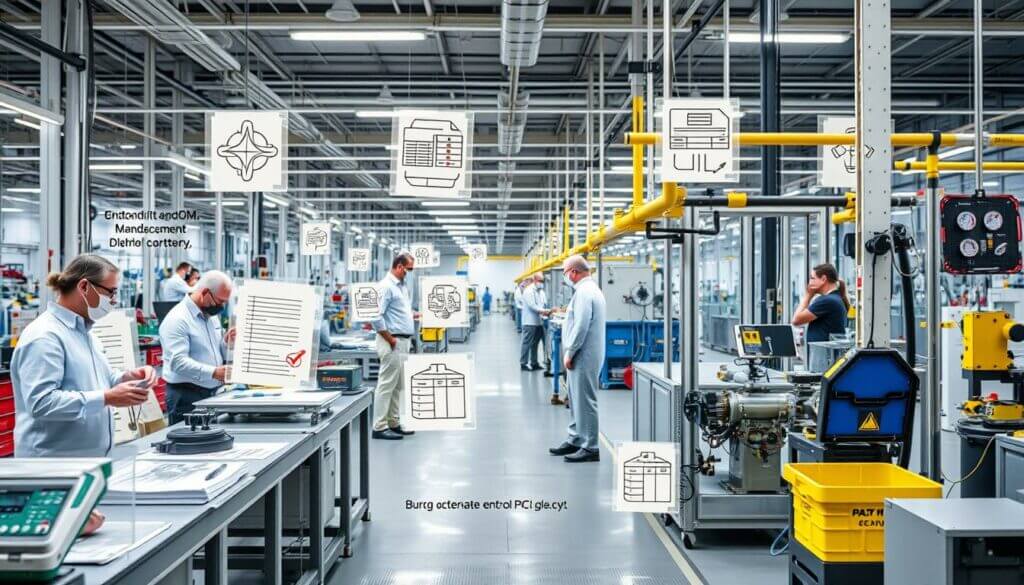
By establishing comprehensive quality management systems, OEM manufacturers continuously improve production processes. This not only meets brand owner requirements but also gives them a competitive edge.
In today's fiercely competitive global market, quality control has become an indispensable core competency for OEM manufacturing.
Quality Management Systems of Professional OEM Manufacturers
The quality management system of professional OEM manufacturers is crucial. It ensures that products meet the brand owner's standards. This system covers everything from raw materials to finished product delivery.
- Document Management: Detailed records of production processes and quality standards
- Personnel Training: Ensuring employees possess the necessary skills and knowledge
- Equipment Maintenance: Regular inspection and calibration of production equipment
- Supplier Management: Rigorous screening and evaluation of raw material suppliers
- Process Control: Monitoring critical parameters during the production process
- Non-conforming Product Handling: Establishing clear handling and traceability mechanisms
OEM manufacturers also conduct regular internal audits. This helps them identify issues and drive continuous improvement.
Through these measures, professional OEM manufacturers can provide reliable production services to brand owners. At the same time, they maintain market competitiveness.
Key Strategies for Raw Material Quality Control
Professional OEM manufacturers understand that raw material quality is critical. It is the foundation for manufacturing high-quality products. They adopt multiple key strategies to ensure raw materials meet the highest standards.
Non-conforming raw materials are immediately returned. This prevents any impact on subsequent production.
Third, establishing a comprehensive raw material tracking system is important. This allows OEM manufacturers to track the source, transportation, and storage conditions of each batch of materials.
If problems are discovered, the root cause can be quickly identified and corrective measures taken. Regular audits and evaluations of suppliers ensure they continuously meet quality requirements.
Finally, OEM manufacturers build long-term partnerships with suppliers. This enables joint development and improvement of raw materials.
Through close communication and technical exchange, raw material quality and stability are continuously enhanced. This collaborative model helps reduce costs while ensuring product consistency and reliability.
Quality Monitoring Measures During Production
Automated inspection systems enable efficient quality checks.
Below is a typical production process quality monitoring measures table:
| Monitoring Stage | Monitoring Measures | Expected Results |
|---|---|---|
| Raw Material Input | Raw material sampling inspection | Ensure raw materials meet specifications |
| Processing | Real-time parameter monitoring | Maintain production stability |
| Semi-finished Product Inspection | Critical point testing | Early problem detection |
| Finished Product Inspection | Comprehensive functional testing | Ensure product quality |
These measures improve product quality while also reducing costs. They also enhance production efficiency. Through continuous improvement of these measures, professional OEM factories can provide brand owners with higher quality products and services.
Finished Product Inspection and Quality Assurance
Finished product inspection is the final checkpoint in professional OEM quality control. OEM manufacturers conduct rigorous testing on each batch of finished products. This ensures finished products meet the brand owner's specifications.
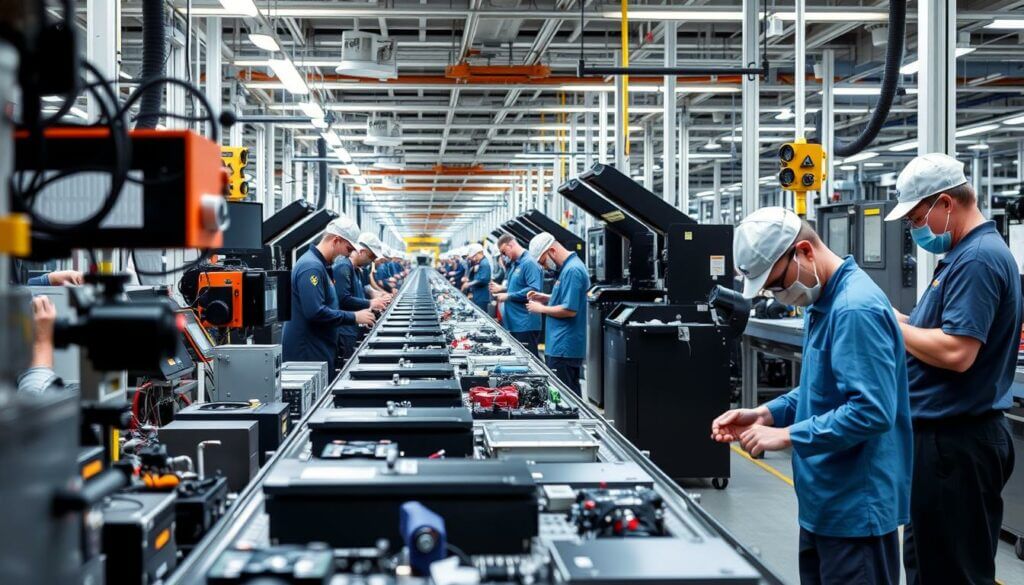
This helps quickly identify and resolve issues.
| Inspection Item | Inspection Method | Acceptance Criteria |
|---|---|---|
| Visual Inspection | Visual examination | No visible defects |
| Functional Testing | Simulated usage environment | 100% normal operation |
| Durability Testing | Accelerated life testing | Meets expected service life |
| Safety Testing | Electrical safety testing | Meets international safety standards |
OEM manufacturers typically retain samples from each batch of products. This is for future quality tracking and improvement.
This not only maintains product quality but also continuously enhances the production process.
Quality Commitments from Professional OEM Manufacturers to Brand Owners
OEM manufacturers sign quality agreements with brand owners. These agreements clearly define product quality standards, inspection methods, and procedures for handling non-conforming products. They also provide regular quality reports, allowing brand owners to see the transparency of the production process.
Many OEM manufacturers also allow brand owners to send personnel to the factory for supervision. This further ensures the rigor of quality control.
Excellent OEM manufacturers go beyond meeting basic quality requirements. They proactively offer improvement suggestions to help brand owners optimize product design and production processes. This not only improves product quality but also strengthens the partnership.
Through continuous quality commitments and improvements, professional OEM manufacturers become reliable partners for brand owners.
Quality Collaboration Models Between OEM Manufacturers and Brand Owners
The key to ensuring product quality lies in the collaboration between OEM manufacturers and brand owners. Both parties need to establish close partnerships. Jointly developing quality standards and inspection processes is essential.

Through open and frequent communication, both parties can quickly identify and resolve quality risks.
Data sharing and analysis are at the core of quality collaboration. OEM manufacturers need to share quality data with brand owners, including key metrics such as defect rates and rework rates.
Brand owners then use this data for in-depth analysis. They provide improvement recommendations.
Joint development and innovation are another way to enhance quality. Brand owners and OEM manufacturers can form R&D teams. Together, they develop new quality control technologies or improve processes.
This collaboration not only improves product quality but also enhances both parties' competitive advantage.
The Role of Professional OEM Manufacturing in Supply Chain Quality Management
Professional OEM manufacturing plays a vital role in supply chain quality management. OEM manufacturers do more than just produce products; they must ensure quality stability throughout the supply chain. This requires close collaboration with upstream suppliers and rigorous inspection of raw material quality.
Through these measures, OEM manufacturers can quickly respond to quality issues. This ensures product quality consistency and reliability. Additionally, they need to maintain close communication with brand owners.
This allows timely adjustment of production strategies to meet changing market demands.
| OEM Manufacturer Role | Impact on Supply Chain Quality |
|---|---|
| Quality Gatekeeping | Ensuring raw materials and finished products meet standards |
| Process Optimization | Improving production efficiency and reducing quality issues |
| Risk Management | Identifying and addressing potential quality risks |
| Technological Innovation | Introducing new technologies to enhance quality management |
Challenges and Solutions in OEM Quality Control
Different brand owners have varying quality requirements. This adds complexity to quality management.
To address these challenges, OEM manufacturers can adopt several solutions:
- Establish a comprehensive supplier evaluation system to strictly control raw material quality
- Invest in advanced quality inspection equipment to improve inspection efficiency and accuracy
- Implement intelligent production management systems for end-to-end quality monitoring
- Strengthen employee training to enhance quality awareness and professional skills
- Build close partnerships with brand owners to jointly develop quality standards
Through these measures, OEM manufacturers can effectively improve quality control standards. This enables them to meet the needs of different brand owners and strengthen market competitiveness.
Continuously improving the quality management system and adapting to the ever-changing market environment is key to the long-term development of OEM manufacturers.
Conclusion
Professional OEM manufacturing plays a vital role in modern manufacturing. From raw materials to finished products, every step pursues quality. This ensures high-performance products and provides brand support.
Quality control is the core of OEM manufacturing. Through comprehensive management systems, problems can be effectively resolved. This improves efficiency, reduces defect rates, and saves costs.
In the future, the OEM industry will face more challenges. Issues such as technological innovation, environmental protection, and labor rights will demand higher quality control standards. However, as long as OEM manufacturers and brand owners collaborate and optimize management processes, they can create better products and deliver superior experiences for consumers.