

As technology advances rapidly, Silicone Printing development continues to break through traditional boundaries, bringing revolutionary printing technology innovations. Are you eager to learn how to use cutting-edge high-performance Silicone Printing to create thinner, more flexible electronic products? In recent years, Silicone Printing technology has attracted widespread attention globally with its unique material advantages and precise printing capabilities.
This next-generation printing technology is leading us toward a smarter, more efficient manufacturing future. Whether in the precision printing of electronic components or the significant reduction in manufacturing costs, Silicone Printing technology has demonstrated enormous potential and contributions.
Key Information
- Material and design innovations brought by Silicone Printing technology
- Cost savings in manufacturing processes and mass production potential
- Significant differences between new Silicone Printing technology and traditional processes
- Emerging applications of Silicone Printing across different industries
- The role of innovative materials in improving electronic product performance
- Analysis of technical advantages and production costs
Exploring the Potential of High-Precision Silicone Printing
When we talk about the Silicone Printing revolution, we are talking about an innovation that can change the very nature of electronic products in our daily lives. You may have already witnessed the transformation that high-precision printing has brought to fields you are familiar with, but its scope of application is continuously expanding.
From our homes to offices and even our clothing, Silicone Printing technology has been integrated into a wide variety of products. The smart garments you wear — the reason they feel so soft and comfortable — is largely thanks to the integration of Silicone Printing technology.
Take another look at the vibrant display screen in your office — these high-resolution monitors have achieved extraordinary thinness while maintaining image quality precisely because of Silicone Printing applications. And those solar photovoltaic panels installed on your roof — it is this high-precision printing method that has made them lighter and more efficient.
In the future, domain applications will further expand your imagination: functional electronic components such as non-volatile memory and high-frequency wireless tags will demonstrate unprecedented performance. We are in an exciting era where technological evolution is omnipresent, and you are becoming part of this revolution.

| Domain | Application Examples |
|---|---|
| Smart Wearables | Soft smart garments with integrated sensors |
| Display Technology | High-resolution, ultra-thin displays |
| Green Energy Technology | More efficient solar photovoltaic panels |
| Data Storage | Non-volatile memory |
| Wireless Communication | High-frequency wireless tags (RFID) |
Milestones in the Evolution of Silicone Printing Technology
Looking back at the development history of Silicone Printing technology, we find that every innovation in the field of electronic component manufacturing has marked a directional shift in process technology. These revolutionary changes are not limited to cost and efficiency alone — they have also opened new horizons in design thinking, allowing engineers to break through physical and process boundaries and use more forward-looking thinking to design and realize next-generation products.
When we discuss the evolution of Silicone Printing, one notable advance is the adoption of roll-to-roll technology. This technology has made printing electronic components more efficient, and the components produced can achieve greater consistency in size and function, while also paving the way for mass production. The application of this innovative process represents yet another important step for the manufacturing industry toward the future.
The emergence of direct-write technology represents another major transformation in the manufacturing industry. This method allows for more precise formation of required patterns on substrates while saving significant manufacturing costs and time. Furthermore, it reduces material waste and has less environmental impact, making it a greener production choice.
Today, as these technologies continue to mature and optimize, the advantages of Silicone Printing in transforming traditional electronic component manufacturing processes have become increasingly apparent. This is not only a leap for the manufacturing industry but also the driving force propelling electronic component design and functional innovation into a new era.
New Applications of High-Precision Silicone Printing in Industry
As the industry revolution continues to progress, the field of electronic component manufacturing is welcoming a new wave of high-precision printing applications. Currently, high-precision Silicone Printing technology has not only given rise to multiple innovative electronic products but has also brought fundamental transformation to the entire industry.
Among these, pressure sensors made by combining plastic substrates with organic semiconductors are redefining the boundaries of sensing technology applications due to their outstanding performance and flexibility. On the other hand, the emergence of electronic paper has enabled entirely new methods of information display, gaining strong consumer favor.
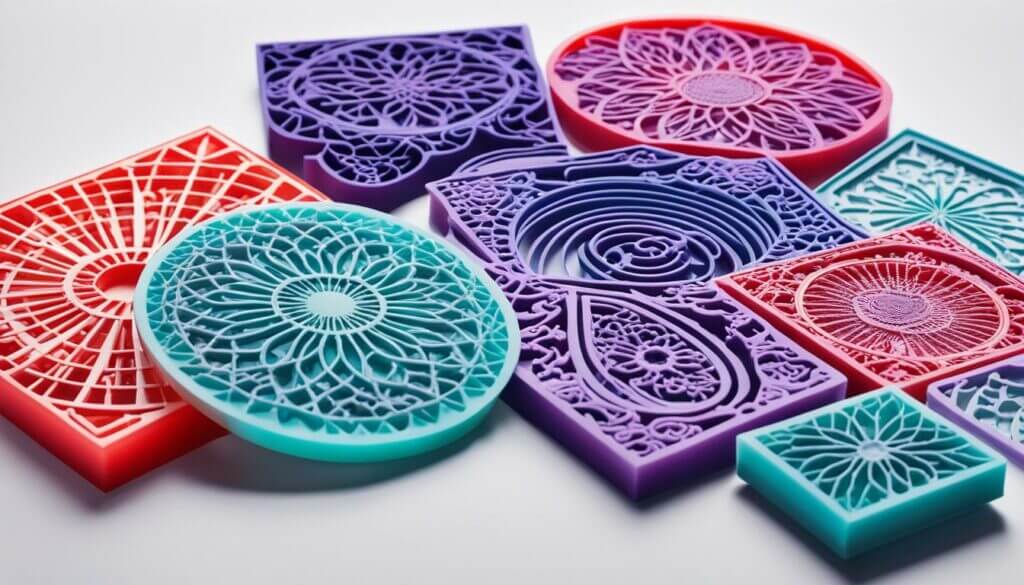
The application of these cutting-edge technologies demonstrates that high-precision Silicone Printing has the potential to disrupt traditional electronic component manufacturing processes. To help you gain a deeper understanding of the advantages these new applications bring, we have carefully prepared the comparison table below.
| Product Category | Traditional Manufacturing Process | High-Precision Silicone Printing Technology |
|---|---|---|
| Pressure Sensors | Rigid substrates, complex processes | Plastic substrates, simplified workflow |
| Electronic Paper | High-temperature processing, higher cost | Room-temperature production, low cost and high efficiency |
As shown in the table, through high-precision Silicone Printing, not only are products more innovative and flexible, but the production process is simplified and costs are reduced. Without a doubt, these characteristics bring more possibilities to your product development, enabling you to maintain a leading position in a fiercely competitive market.
Application of Innovative Materials in Silicone Printing
In recent years, the development of innovative materials has brought significant breakthroughs to Silicone Printing applications. For example, organic semiconductor materials, with their excellent electronic properties and processing convenience, have demonstrated enormous potential in printing flexible electronic components. Additionally, metallic nanoparticle inks, which are highly conductive and can be efficiently applied to various substrates, have made notable contributions to printed circuit board manufacturing.
Plastic substrates, as a major material innovation in the Silicone Printing field, have made end products lighter and more portable due to their thin and lightweight characteristics. This flexibility significantly broadens the design scope of electronic products, meeting modern consumers' dual demands for lightweight and high-performance portable electronic devices.
We have summarized the following key features of innovative materials in Silicone Printing applications:
| Material Type | Key Properties | Printing Application Range | Impact on Products |
|---|---|---|---|
| Organic Semiconductors | Good electrical performance, easy to process | Flexible circuits, sensors | Improved flexibility of electronic products |
| Metallic Nanoparticle Inks | High conductivity, easy to apply | Conductive traces, connectors | Facilitates development of miniaturized and high-performance circuits |
| Plastic Substrates | Thin, lightweight, soft, flexible | Displays, solar panels | Reduces device weight, increases portability |
These material innovations have not only optimized product performance but also contributed to environmental protection and sustainable development. The use of plastic substrates, especially recyclable plastics, enables reuse after a product's lifecycle ends, further reducing environmental impact.
Advantage Analysis of High-Precision Silicone Printing Technology
When we discuss Silicone Printing advantages, the high-efficiency production capability it offers cannot be overlooked. This technology leverages advanced technical analysis and innovative design to make the production process faster and more cost-effective. Let us take a deeper look at the key advantages Silicone Printing technology demonstrates compared to traditional printing.
| Advantage | Traditional Printing | Silicone Printing |
|---|---|---|
| Production Environment | Requires vacuum equipment | Production under atmospheric pressure |
| Production Efficiency | Complex procedures | Simplified production workflow |
| Process Cost | High equipment investment | Equipment cost savings |
| Product Quality | Consistency fluctuations | High-precision manufacturing |
From the table, it is clear that Silicone Printing has numerous significant advantages compared to traditional printing. Whether in production efficiency or cost control, Silicone Printing demonstrates its tremendous potential for the future of manufacturing. These advantages not only solidify Silicone Printing's market position but also provide customers with more cost-effective products.
Production Cost Analysis of High-Precision Silicone Printing
When discussing Silicone Printing costs, production efficiency is always the primary focus for enterprises and manufacturers. Precise cost analysis helps promote the commercialization and adoption of this innovative technology. You may be curious — just how much more cost-effective is high-precision Silicone Printing technology compared to traditional methods? The answer may surprise you.
Based on the emerging Silicone Printing mechanism, energy consumption and raw material usage during the production process have been significantly reduced. This not only lowers per-unit production costs but also improves overall production efficiency and output quality. The following data concisely illustrates the cost impact of this technology:

| Product Type | Traditional Production Cost | Silicone Printing Cost | Cost Savings Ratio |
|---|---|---|---|
| Circuit Boards | Baseline value | < 1/3 Baseline value | > 66% |
| LCD Displays | Baseline value | < 0.1% Baseline value | > 99.9% |
| LSI | Baseline value | < 0.01% Baseline value | > 99.99% |
From the table, it is clear that whether in circuit board or other complex component manufacturing, Silicone Printing technology can achieve remarkable cost-effectiveness. On one hand, production process optimization shortens production cycles, thereby reducing equipment depreciation and maintenance costs; on the other hand, high-precision technology lowers rework and waste caused by defect rates.
Overall, Silicone Printing technology is undoubtedly a worthwhile investment to consider in your future production strategy — it not only helps enterprises save costs but is also a key step toward green manufacturing and enhanced market competitiveness.
Process Innovation in Silicone Printing Technology
Process innovation plays a crucial role in the current printing technology landscape. The Silicone Printing process, as a representative of new printing technology, has significantly improved efficiency and reduced costs through its innovations in manufacturing workflows. The two major breakthroughs of this technology — direct-write methods and roll-to-roll substrate configuration — have now become industry focal points.
Direct-write technology, also known as "templateless printing," allows producers to shape circuit patterns directly on substrates. This approach not only accelerates manufacturing time but also reduces material waste. Roll-to-roll refers to a continuous production method that makes the manufacturing process smoother, thereby increasing overall output. These innovative processes are key to driving the Silicone Printing process toward precision and large-scale production.
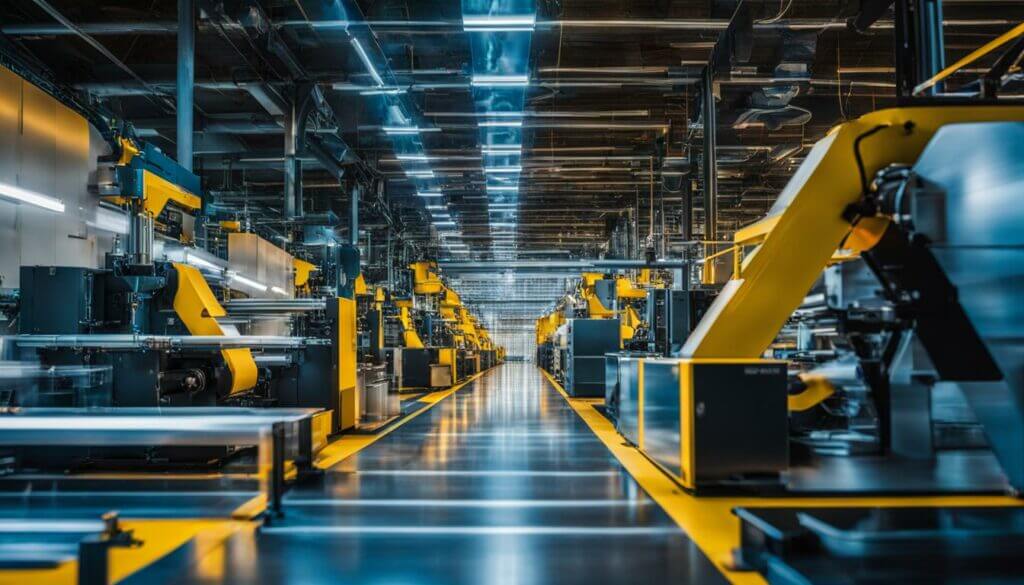
Traditional printing technology often requires multiple steps and long processing times. The new Silicone Printing technology breaks through these limitations, making printed circuit production simpler and more efficient. Further in-depth research and application will ensure that Silicone Printing maintains its position in future markets, not only breaking the constraints of traditional technology but also bringing users more choices and possibilities.
Role Analysis: Which Companies Are Driving Silicone Printing Advances
Understanding which companies play important roles in advancing Silicone Printing not only helps grasp industry trends but also illuminates the current market leaders. We closely monitor the corporate role analysis of these companies, hoping to see the future development of Silicone Printing technology.
| Company Name | Leading Technology | Industry Contribution |
|---|---|---|
| Fuji Electric | Direct-write technology | Pioneering R&D and production of Silicone Printing machines |
| Albac | Roll-to-roll technology | Improving printing efficiency and precision, advancing product commercialization |
| Epson | High-resolution Silicone Printing | Achieving technological innovation in displays and sensors |
| Dai Nippon Printing | Silicone material development | Expanding Silicone Printing application scope, actively researching new materials |
These companies that invest enormous resources in advancing Silicone Printing are driving the entire industry toward higher standards through continuous technological innovation and market orientation.
Challenges and Opportunities: Future Development Trends of Silicone Printing Technology
Facing Silicone Printing challenges, you will witness a tremendous transformation of technological breakthroughs. As industry demand continues to grow, responding to development trends has become the core driving force for innovation. Nevertheless, achieving Silicone Printing production of high-end electronic components such as high-frequency transistors remains a formidable task.
When discussing the technological future, we cannot ignore the leap from laboratory to market. Researchers and enterprises in the Silicone Printing technology field are conducting innovative experiments aimed at transitioning from simple electronic components to more complex electronic products, gradually overcoming technical challenges in manufacturing.
| Current Stage | Future Goals | Anticipated Challenges |
|---|---|---|
| Silicone Printing of simple electronic components | High-speed electronic components and LCD displays | High-frequency transistor manufacturing precision |
| Basic research and applied experiments | Commercialization and mass production | Process reliability and mass production efficiency |
Custom Applications of High-Precision Silicone Printing Technology for Different Products
With the advancement of technology, high-precision printing has become one of the important trends for many enterprises pursuing product innovation. Custom applications, driven by this trend, demonstrate limitless possibilities. This technology can provide extremely high-precision printing services tailored to customers' specific needs, producing distinctive products.
| Product Type | Custom Application Examples | Innovative Features |
|---|---|---|
| Wearable Devices | Flexible displays | Thin, soft, highly durable |
| Transparent Displays | Interactive touchscreens | High transparency, multi-touch |
| Optical Engines | High-definition projection technology | High resolution, color accuracy |
Since high-precision Silicone Printing provides more refined pattern rendering and powerful material adaptability, whether for transparent displays that emphasize visual effects or wearable devices that pursue ultimate thinness, this technology can ensure products achieve optimal performance in both functionality and appearance, bringing unprecedented convenience and experience to your daily life.
Global Perspective on Silicone Printing Technology Development
Facing the rapid evolution of global Silicone Printing technology, countries are actively engaging in international cooperation to jointly explore cutting-edge technologies and promote comprehensive industry development. Taiwan, as a key technology-developing nation, with its research institutions such as ITRI's Materials and Chemical Research Institute, plays an extremely important role in international cooperation and knowledge sharing. The following table reveals the importance of international cooperation in advancing Silicone Printing technology development.
| Cooperation Area | Cooperation Goals | Expected Benefits | Notable Participating Institutions |
|---|---|---|---|
| Material Innovation | Developing new silicone materials | Improving printing quality and efficiency | ITRI Materials and Chemical Research Institute |
| Process Technology | Optimizing printing processes | Reducing production costs | Dai Nippon Printing, Japan |
| Market Expansion | Expanding Silicone Printing applications | Creating new market opportunities | 3M Company, USA |
| Technical Standards | Establishing international printing standards | Unifying technical specifications | Semiconductor Industry Association International |
The above data shows that technology development is closely linked to international cooperation. Cooperation not only promotes technological innovation but also brings entirely new market opportunities to related industries. By combining global Silicone Printing resources and wisdom, we can look forward to broader development prospects in this field in the future.
Patent Landscape and Intellectual Property of High-Precision Silicone Printing Technology
In today's fiercely competitive technology market, patent landscape and intellectual property management are crucial for protecting your innovative achievements. High-precision Silicone Printing technology is widely noticed by companies around the world due to its breakthroughs in numerous application fields. Therefore, establishing a strong intellectual property strategy is the cornerstone of maintaining your industry leadership.
To prevent your technological innovations from being used without authorization, proper technology protection measures are indispensable. This includes not only filing patents to safeguard your R&D achievements but also conducting patent map analysis to understand patent distribution and potential competitors in the professional field. Through these methods, you can more wisely formulate business strategies and, when necessary, initiate cross-enterprise patent sharing or licensing cooperation.
Mastering a solid patent landscape will help you establish a firm market position globally. With technology evolving rapidly, actively leading and participating in intellectual property discussions will ensure that you maintain commercial success and influence not only today but also in the future.