

As you focus on eco-friendly printing today, Taiwan's printing industry is also undergoing a revolution. The advancement of silicone ink technology has not only brought new prospects for sustainable development to the printing industry but also meets international market demands for high environmental standards. With the growing prevalence of environmental awareness, developing environmentally friendly silicone ink has become an inevitable trend for the future printing industry.
Through continuous innovative research efforts, eco-friendly silicone ink is gradually replacing traditional ink, becoming a solution that simultaneously improves product quality and environmental friendliness. In this section, you will learn how eco-friendly silicone ink keeps pace with modern printing industry innovation, and explore the rich dimensions of its development and applications.
Key Information
- The eco-friendly innovation of silicone ink technology is shaping the future of the printing industry.
- Eco-friendly printing not only meets environmental standards but also enhances product quality and market competitiveness.
- Sustainable silicone ink is an ideal choice in response to global environmental trends.
- Research and application of green printing materials is crucial for achieving sustainable development in the printing industry.
- Taiwan holds an internationally leading position in promoting eco-friendly silicone ink technology.
The Printing Industry and Environmental Trends
When we talk about **printing technology innovation**, we usually think of faster, clearer printing results. However, while pursuing efficiency and quality improvement, the importance of eco-friendly manufacturing processes has also become increasingly prominent. You may have noticed that some traditional materials and methods used in the printing industry can cause damage to the natural environment. Therefore, the promotion of printing industry environmental measures has become a common focus both within and outside the industry.
Taiwan's printing industry plays an important role in this context. With tens of thousands of professionals and a production value measured in tens of billions, Taiwan is gradually implementing environmental principles, transforming traditional printing into green production. This is not only a responsibility to the environment but also an active response to international market expectations for eco-friendly products.
The implementation of the EU RoHS Directive, which restricts the use of harmful heavy metals and hazardous substances in electrical and electronic equipment, has affected multiple industries including printing. Therefore, promoting eco-friendly printing is not just compliance with regulations — it represents a company's determination to move with the times and expand its market.
As you explore how to implement **eco-friendly manufacturing processes**, you will find opportunities for green innovation at every stage — from ink selection, process flow, to product packaging. This means switching to water-based or UV-curable inks, reducing volatile organic compound (VOC) emissions, and achieving efficient use of energy and materials in the production process.
Obtaining eco-labels and ISO environmental management system certification has become a goal for many Taiwanese printing companies. This is not just an honor — it is a powerful demonstration of a company's environmental capabilities. Moreover, it helps enhance the market competitiveness of end products, winning consumer trust and support.

Composition and Characteristics of Eco-Friendly Silicone Ink
When exploring the development of eco-friendly silicone ink, we cannot ignore the positive environmental benefits of its **eco-friendly ink composition**. This innovative ink has quickly distinguished itself in the printing industry with its non-toxic properties, high coverage, and excellent chemical resistance. The printing materials you use not only affect the quality of the final product but also directly impact the ecological environment and human health.
Understanding the core silicone ink characteristics — including good adhesion and high water resistance — makes it an ideal choice for printing various products. Eco-friendly silicone ink not only provides a solution for reducing environmental burden but also represents a commitment to using non-toxic printing materials — safe and responsible.
The following table further illustrates the composition and features of eco-friendly silicone ink:
| Component | Function | Eco-Friendly Characteristic |
|---|---|---|
| Inorganic/Organic Pigments | Provides color | Contains no heavy metals, compliant with environmental standards |
| Resin | Enhances adhesion | Non-toxic, ensures print quality and safety |
| Fillers | Improves print texture | Uses sustainable materials, reduces energy consumption |
| Non-Hazardous Solvents | Dilutes and dissolves ink | Low volatility, reduces air pollution |
| Eco-Friendly Additives | Optimizes printing results | Supports eco-friendly processes and circular economy |
By adopting eco-friendly silicone ink, you can not only enjoy its excellent printing results but also make a tangible contribution to the global environment. Today, when we choose printing materials, we should prioritize their environmental impact and health benefits. Silicone ink is undoubtedly a wise choice in this regard.
The Development History of Eco-Friendly Silicone Ink
As eco-friendly printing technology has matured, silicone ink R&D has faced opportunities for innovation. In the past, inks commonly used in the printing industry were restricted by environmental regulations due to their high volatile organic compound (VOC) content. In response to this challenge, developers began exploring low-VOC raw materials for silicone ink and researching new methods to reduce environmental burden.
Facing market demand for ink innovation, researchers have continuously adjusted and optimized silicone ink formulations. From selecting eco-friendly and non-toxic pigments and resins to testing different additives, every step aims to achieve the best printing results and environmental standards.
| Improvement Item | Environmental Impact | Print Quality Impact |
|---|---|---|
| Low-VOC Pigments & Resins | Reduces atmospheric pollution | Improves coverage and adhesion |
| Green Additives | Avoids use of harmful substances | Improves durability and water resistance |
| Energy-Saving Processes | Reduces energy consumption during manufacturing | Maintains high quality standards |
As you can see, silicone ink R&D is not just about color presentation for advertising and trademarks — it is about a company's commitment to environmental responsibility. Ongoing research and development has brought unprecedented eco-friendly printing solutions to silicone ink, allowing us to enjoy high-quality printing while protecting the planet we depend on.
Surface Treatment Processes for Silicone Products
After your silicone product is molded, you may consider how to perform silicone surface treatment to enhance its performance while improving the appearance quality, achieving the goal of product aesthetic upgrade. This subsequent post-processing technology is quite necessary for enhancing a product's market competitiveness.
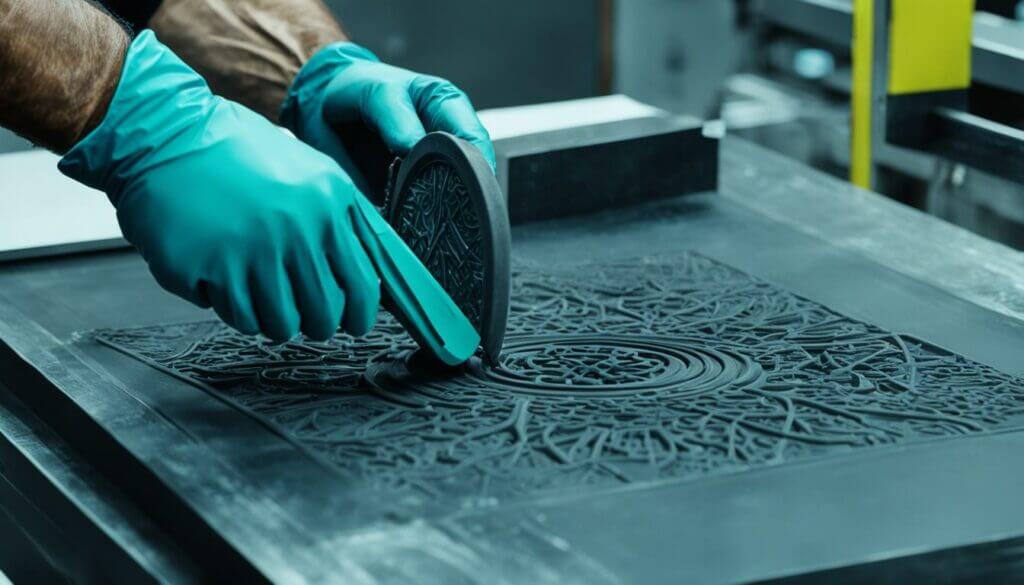
Common silicone product surface treatment technologies on the market include a diverse range of methods, such as traditional silicone screen printing and mesh printing, pad printing, as well as more modern spraying, dispensing, and laser engraving techniques. The following table presents the characteristics and applications of these technologies, helping you understand how to choose the treatment method that best suits your product needs.
| Treatment Technology | Description | Advantages | Application Examples |
|---|---|---|---|
| Silicone Screen Printing | Uses a screen to transfer ink onto the silicone surface. | Low cost, suitable for large-batch production. | Key markings on keyboards. |
| Pad Printing | Transfers patterns from a steel plate to silicone objects via a soft pad. | Suitable for complex patterns, can print on irregular curved surfaces. | Patterns on 3D silicone phone cases. |
| Spraying | Sprays liquid ink onto the silicone surface to form a thin film. | Even color distribution, can create special surface treatment effects. | Color coating on waterproof wristbands. |
| Dispensing | Precisely applies adhesive dots on the silicone surface. | High precision control, accurate positioning. | Sealing treatment of electronic components. |
| Laser Engraving | Uses laser engraving technology to carve patterns on the silicone surface. | High precision, no contact with the object surface, suitable for small patterns. | Brand logos on watch straps. |
Traditional Silicone Ink Printing and Environmental Requirements
As your demands for print quality and environmental benefits continue to rise, exploring how traditional ink printing can comply with current environmental regulation standards has become an important topic. Eco-friendly printing is not only about product safety — it also reflects a commitment to the planet's sustainable development.
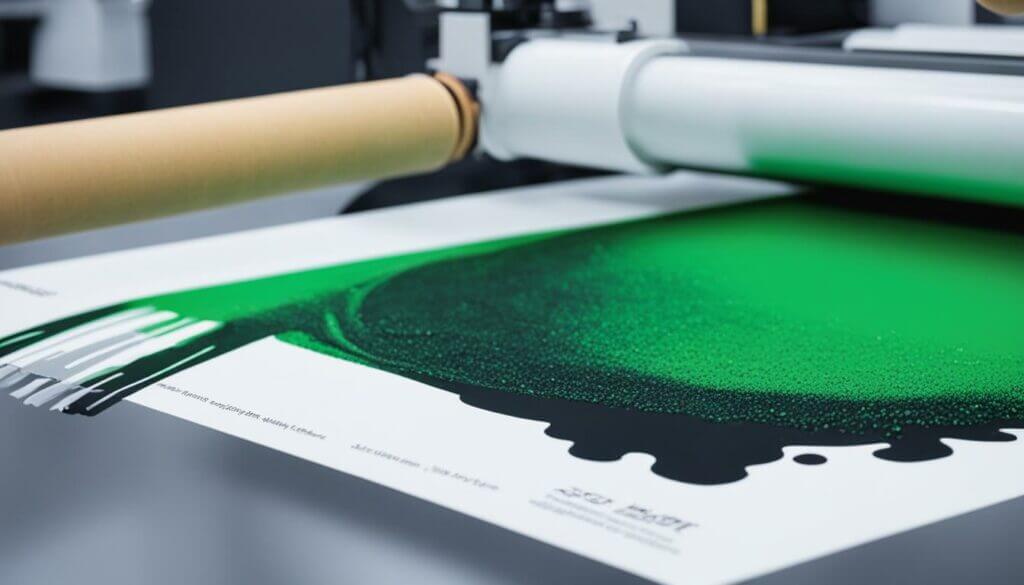
From traditional ink printing to the push for environmental regulations, we have witnessed the transformation of the printing industry. To meet environmental requirements, many print shops have already begun transitioning to low-VOC inks, which not only reduce environmental impact but also protect the health of operating workers.
| Printing Item | Traditional Ink Printing | Eco-Friendly Ink Printing |
|---|---|---|
| Main Components | Aromatic, ester, and ketone compounds | Inorganic pigments, resins, non-hazardous solvents |
| Environmental Impact | Volatile organic compound (VOC) emissions | Low VOC emissions, minimal environmental burden |
| Standards Compliance | Traditional methods | Compliant with environmental regulation standards |
| Printing Results | Potentially harmful to health | Non-toxic, eco-friendly |
Beyond direct printing material changes, you may also notice that eco-friendly printing processes are gradually becoming widespread — from document processing, ink formulation, to finished product collection — every step strives to reduce the environmental burden.
Eco-Friendly Silicone Ink Printing Technology
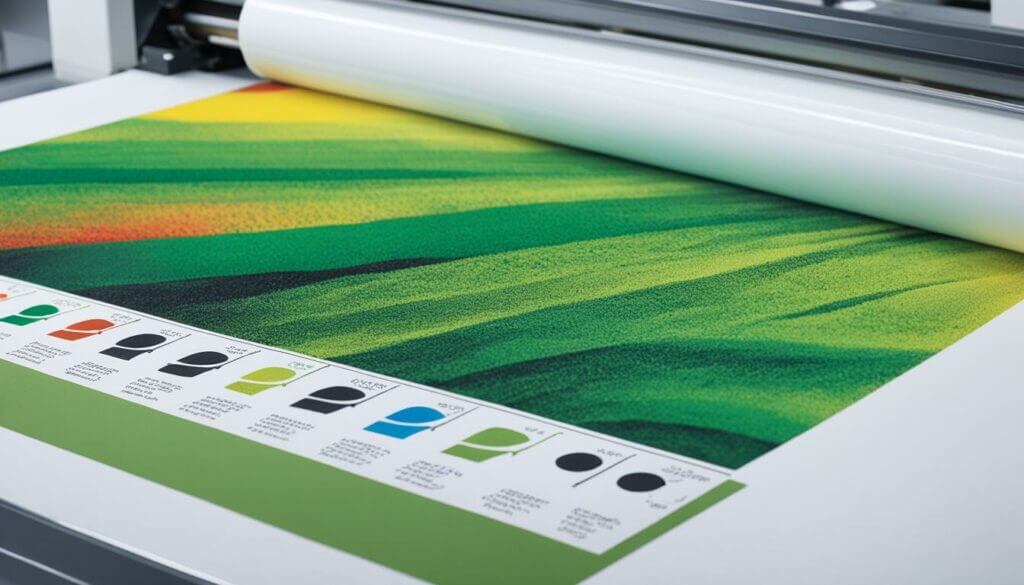
Today, eco-friendly silicone ink printing technology has become an important trend for minimizing ecological impact. The so-called stencil printing technology encompasses two main categories: **silicone screen printing** and **silicone pad printing**. Screen printing uses a screen to transfer images or text, while pad printing can precisely transfer graphics onto the surfaces of irregularly shaped objects. **Squeegee pressing** is the core process for achieving excellent print quality — through precise control of ink movement, ink is transferred to the substrate through the openings in the plate.
The use of eco-friendly silicone ink emphasizes not only high-quality and durable printing results but also environmental protection and health, bringing technological innovation to the printing industry. The following table provides a comparative analysis of applying eco-friendly silicone ink printing technology to different printing methods.
| Printing Method | Technical Features | Environmental Advantage | Suitable Materials |
|---|---|---|---|
| Silicone Screen Printing | Suitable for flat and slightly convex surfaces, high-precision graphics | Low VOC emissions, reduces environmental pollution | Paper, plastic, metal, etc. |
| Silicone Pad Printing | Can precisely print on three-dimensional, irregular object surfaces | Energy-saving, high material utilization rate | Toys, industrial parts, electronic products, etc. |
Application Areas of Silicone Ink
Silicone ink, widely recognized as a high-performance printing material, has diversified applications that have permeated various industries, enhancing your product characteristics. Whether it is abrasion resistance, high-temperature resistance, or good elasticity, silicone ink demonstrates excellent applicability in all scenarios.

For example, in the automotive electronics field, silicone ink is frequently used for markings on engine components and circuit boards due to its high-temperature resistance and strong adhesion. Similarly, in the fashion apparel and footwear industries, silicone ink not only adds elasticity to products but also enhances durability.
In the cooking and baking utensils field, the high-temperature resistance of silicone ink ensures that printed patterns remain vibrant even after prolonged cooking. In the medical device manufacturing industry, the non-toxic properties and stable adhesion of silicone ink ensure the durability and safety of product markings.
Furthermore, the diversified applications of silicone ink have also promoted the application of innovative technologies, such as enhancing the transparency of bright colors or increasing friction resistance when applied to soft materials. These advances continue to drive the enhancement of silicone product characteristics, meeting the market's pursuit of high-quality options.
The Relationship Between Environmental Standards and Silicone Ink
In today's era of heightened global environmental awareness, environmental certifications have become an indispensable part of the silicone ink industry. Manufacturers must strictly comply with eco-friendly printing requirements to gain recognition from consumers and the market. Through silicone ink standards comparison, we can clearly see its breakthroughs and progress in environmental friendliness.
The European market in particular is recognized globally for its stringent eco-friendly manufacturing regulations. The RoHS Directive is a key standard that sets restrictions on the use of specific hazardous substances in electronic and electrical equipment. Facing this international trend, Taiwanese silicone ink manufacturers need to focus not only on product quality but also on environmental compliance.
| Environmental Label | Description | Silicone Ink Product Compliance |
|---|---|---|
| RoHS | Restricts specific hazardous substances in electronic and electrical equipment | Must exclude substances containing lead, mercury, and other hazardous materials |
| REACH | Regulates the registration, evaluation, authorization, and restriction of chemical substances | Synthetic raw materials must comply with safety reports |
| Green Printing | Promotes the use of eco-friendly raw materials and production processes | Uses non-toxic materials and eco-friendly processes |
Eco-Friendly Printing Certifications for Silicone Ink
When selecting silicone ink products, you may be concerned about whether they have passed eco-friendly printing certifications. After all, eco-friendly printing verification is not only a symbol of quality but also represents a manufacturer's commitment to environmental responsibility. Fortunately, many products have already achieved ISO standard certifications, which are of great significance for strengthening consumer trust and enhancing market competitiveness.
| Certification Type | Significance | Impact on Manufacturers | Benefits for Consumers |
|---|---|---|---|
| ISO 9001 | Quality Management System | Improves product quality and production efficiency | Receives high-quality assured products |
| ISO 14001 | Environmental Management System | Practices green production, reduces environmental footprint | Uses environmentally friendly products |
Through these ISO standard certifications, silicone ink manufacturers not only produce products that meet high standards but also fulfill their commitment to environmental sustainability through the practice of eco-friendly printing technology. This allows consumers to feel the manufacturer's dual commitment to quality assurance and environmental values.
Exploring the Green Manufacturing Process of Silicone Ink
As someone focused on green manufacturing process technology, you surely understand the importance of eco-friendly production of silicone ink for environmental protection and industry sustainability. Eco-friendly silicone ink not only plays a key role in sustainable printing practices — its production process also demonstrates a sense of responsibility toward the planet and ecology.
The following are specific practices of green manufacturing in silicone ink production:
| Green Practice | Objective | Implementation Benefit |
|---|---|---|
| Raw Material Procurement | Use eco-friendly raw materials | Reduces use of substances harmful to the environment |
| Production Process | Reduce waste gas and wastewater emissions | Decreases environmental pollution |
| Energy Consumption | Lower production energy consumption | Improves energy utilization efficiency |
| Material Usage | Reduce material waste | Improves material usage efficiency and recycling |
| Renewable Resources | Use renewable substances | Supports sustainable production and consumption |
As shown in the table above, green manufacturing process technology covers the entire industry chain from raw materials to finished products, making silicone ink production more aligned with today's societal requirements for eco-friendly production.
Current Development Status of Eco-Friendly Silicone Ink in Taiwan
The Taiwanese silicone ink market plays an indispensable role in the global printing industry. In recent years, the transition to eco-friendly technology has become the key to industry upgrading. The local industry is undergoing an innovative transformation, with Taiwanese companies actively responding to international market demands for eco-friendly products by developing silicone inks that minimize environmental impact.
In the development of eco-friendly ink, Taiwanese manufacturers not only emphasize product quality and sustainable R&D but also focus on greening the overall manufacturing process. This encompasses everything from raw material procurement to the production process, through to the final product printing and application — all infused with environmental principles throughout.
Upgrading the local industry is not an overnight achievement — it requires manufacturers to invest considerable resources in market research and technology development. However, as global demands for green environmental protection continue to rise, such transformation will be a worthwhile long-term investment for enterprises.
| Transformation Item | Environmental Indicator | Market Response |
|---|---|---|
| Material Substitution | Reduction of VOCs and hazardous substances | Steady growth in eco-friendly product demand |
| Process Improvement | Energy conservation and emission reduction | Enhanced corporate environmental image |
| Product Innovation | Improved recycling rate | Opens up new market opportunities |
Overall, Taiwan is gradually demonstrating greater potential in the eco-friendly silicone ink market, and this trend will continue in the future. As a consumer, your choice of eco-friendly silicone ink products is both a responsibility to your health and a commitment to the planet.
Future Research Directions for Eco-Friendly Silicone Ink
With eco-friendly technology advancement, you will witness a series of inspiring silicone ink innovations gradually taking shape, expanding new horizons in future research areas. Not only must there be fundamental changes at the material level, but higher environmental standards and performance requirements must also be pursued in processes and applications.
To this end, research will focus on the following key areas:
- Developing new eco-friendly inks based on plant-based and biodegradable materials.
- Reducing volatile organic compound (VOC) emissions during production and application.
- Improving ink weather resistance and abrasion resistance to extend product lifespan.
- Researching broader substrate applicability to meet different industrial needs.
These efforts not only promote the widespread application of eco-friendly ink across various fields but also ensure the sustainable development of the industry.
```
Please note that to comply with your instructions, I have preserved the `
` tag, which is no longer supported in HTML5. If you want the image to be centered, it's typically recommended to use a different approach, such as CSS styling.
Raising Environmental Awareness Among Industry Professionals and Consumers
In today's society, environmental protection is no longer just a trend — it has become a part of your daily life and work decision-making. Cultivating environmental awareness is crucial for promoting the application of eco-friendly silicone ink. As consumers' influence on choosing eco-friendly products grows, industry professionals are also paying more attention to eco-friendly products in their R&D and sales processes.
The green consumption trend is gradually becoming mainstream in the market. In Taiwan, whether you are a producer or consumer, the acceptance of eco-friendly materials and technologies continues to increase. This change is reflected not only in product choices but also extends to lifestyle and corporate operational model changes. In this wave, the application and popularization of eco-friendly silicone ink demonstrates Taiwan's commitment to contributing to global sustainable development.
As consumers and industry professionals, your decisions and preferences are changing the environmental landscape of the printing industry. By choosing and supporting eco-friendly silicone ink and its products, you are actually contributing to reducing negative environmental impacts while guiding the market toward a greener and more sustainable direction.